The bonus culture that's emerged in the last thirty years is offensive, as well as being a primary contributor to the growing inequality in our societies. It has contributed directly to the current financial crisis in two ways. First, in some instances, the scale of bonuses have meant that the losses being posted by major institutions would have been substantially removed, if not eliminated entirely, were they not paid out. In this sense they amount to little more than theft, since the point of a bonus is to reward performance, not produce failure. Second, by linking bonuses and options to short-term movements in share prices, they also indirectly encouraged individuals to take excessive risks, which produced the bubbles that popped in our faces this past year or so.
So far nothing surprising. Ridiculous bonuses are proving both damaging to society and damaging to the economy. But this is, unfortunately, about as far as the argument goes before things start getting complicated.
One: who is to say what is a reasonable salary for a private sector job if we don't trust the market to do it? If we impose more restrictive bonus offerings across the board, then businesses will simply raise salaries instead. Some of us in this world are willing to get paid less because we believe our jobs have a social value to them. But most people aren’t so lucky: they do stuff they’d rather not do because it gives them the money to live. This current crisis may have been fuelled by greed, but – I’m sorry – that’s capitalism. Most jobs aren’t rewarding enough that people would do them for free. And if you were offered twice your salary to do the same job in the office two blocks along, would you
really say no?
Two: what can we do to stop this problem? Yes, we can probably fix bonuses in state-owned or state-controlled banks, and fix them a lot lower than this $500,000 number that Obama has mentioned. Given that no banker in the current market is likely to quit their job in the expectation of finding a new one, we might even have a decent impact as a result. But if things return to the
status quo ante when the economy picks up again, the only lesson bankers will learn is that it pays to get stock options turned into cash offshore even more quickly than they have done in the past. Without meaningful structural changes, bankers will, entirely rationally, conclude that a periodic dressing down in front of senators (relieved no doubt afterwards with a martini in a personal limousine taking them to the spa at the weekend country mansion) is a price worth paying for $300 million a year. I’d take that deal!
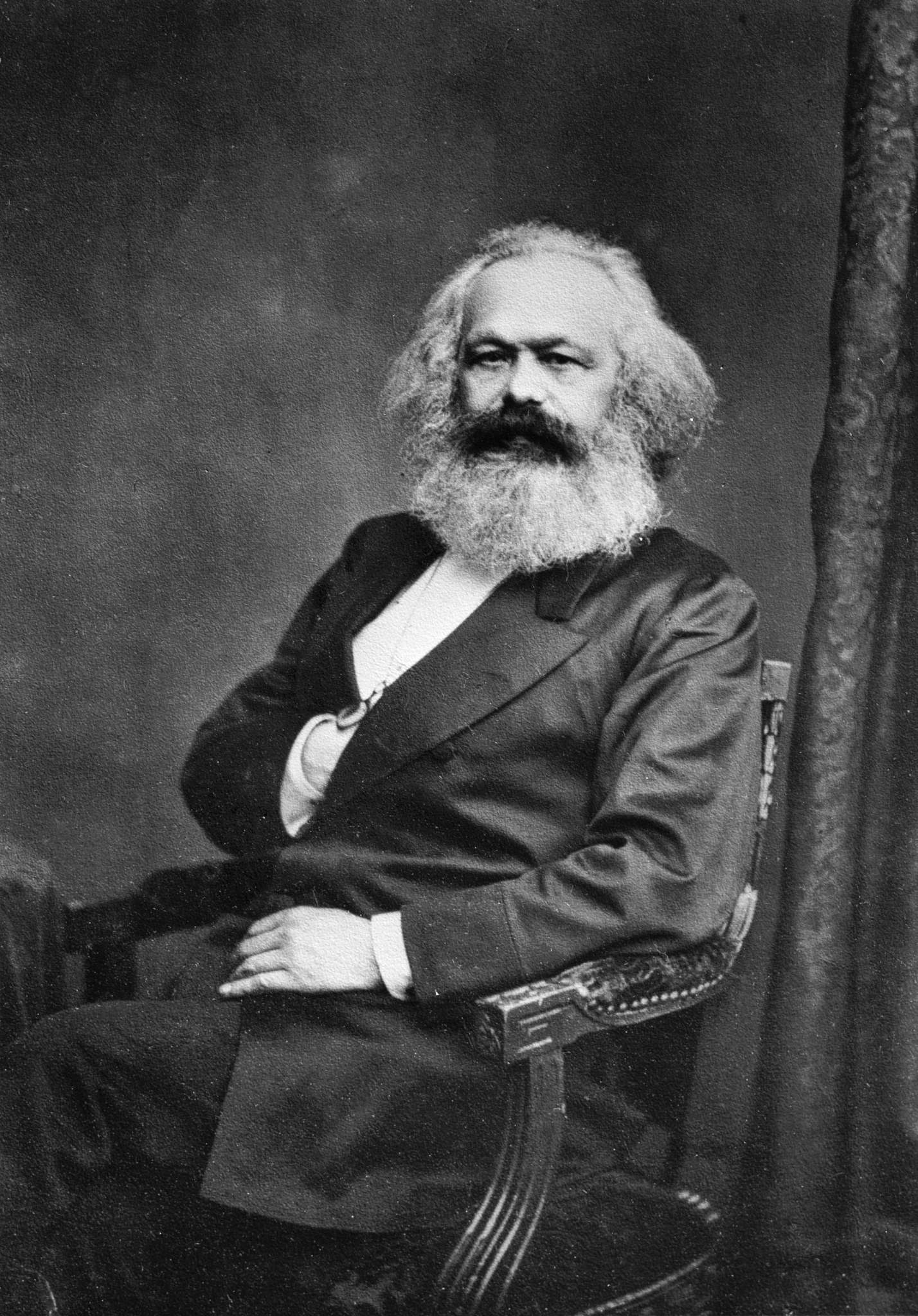
At risk of appearing provocative, this brings me to a certain fellow who has been mentioned surprisingly rarely during this latest crisis, certainly in comparison to past crises of a similar type: a chap you may have heard of by the name of Karl Marx.
Marx argued that the ‘true’ value of a product was generated by the labour put into its creation, but that this did not necessarily accord with the market value that the product could be sold for. By organizing well, by generating economies of scope and scale, by controlling a particular niche in the supply chain, a little bit of money could be shaved off the price of a product or a little bit extra charged for it: and as you sell more and more product, this little margin starts to add up to a lot of profit for the company doing the shaving.
The genius of the system, Marx believed, was that a big capitalist could skim a couple of pennies from each of his workers or cadge a couple extra from each of his customers, and none of them would likely notice the difference. Meanwhile, he’d end up with a fortune. (Bet you didn’t realise that Richard Pryor in the
Superman movie was following in such a hallowed tradition of political economy!) In the Marxist model, the system was supposed to collapse when the competitive pressures to increase margins generated a class of overworked, alienated, revolutionary-minded proletarians who then took the big nobs out and strung them up from the lampposts.
Of course, Marx’s prediction didn’t turn out too well, and the people who claimed to be following in his name didn’t produce much of an alternative (to say the least!) Instead, democratic governments intervened in the economy in ways that sought to limit the most extreme inequalities produced through capitalist self-interest, effectively helping capitalists survive against their own self-destructive urges, you might say. We know these legacies as: unemployment insurance, health care, pensions, public education, and even central banks. So the revolution didn’t come.
Still, the question Marx's theory raises about identifying the 'true' value of a product or service continues to have a powerful resonance. After all, it was the breakdown of the link between 'real' values of houses (whatever they are) and their market prices that arguably got us into this mess. Moreover, the bonus culture is a perfect manifestation of the principle of surplus value raised to the nth degree. It’s been particularly pervasive, in my view, in the banking sector precisely because this is the most
globalised part of the world economy and therefore arguably the bit that’s least subject to the restraints imposed by national governments, and the most free to the play of pure market forces.
All of which leads me to conclude that the only restraints on today’s international capitalists that are likely to be effective will be based on comprehensive, global agreements. Either that or it's lamppost time down at Goldman Sachs!
Alex Goodall
Papamoka’s European Contributor
From
A Swift Blow to the HeadLabels: Bank Bonuses, karl marx